
Choosing Washer Capacity for an Apartment Laundry Routine
Choose apartment washer capacity around a normal week of laundry and the bulkiest item you regularly wash. Check both the appliance manual and the item’s care label, and measure the space needed to open the washer and load it. A larger drum helps only if the machine fits and its cycle limits suit your loads.
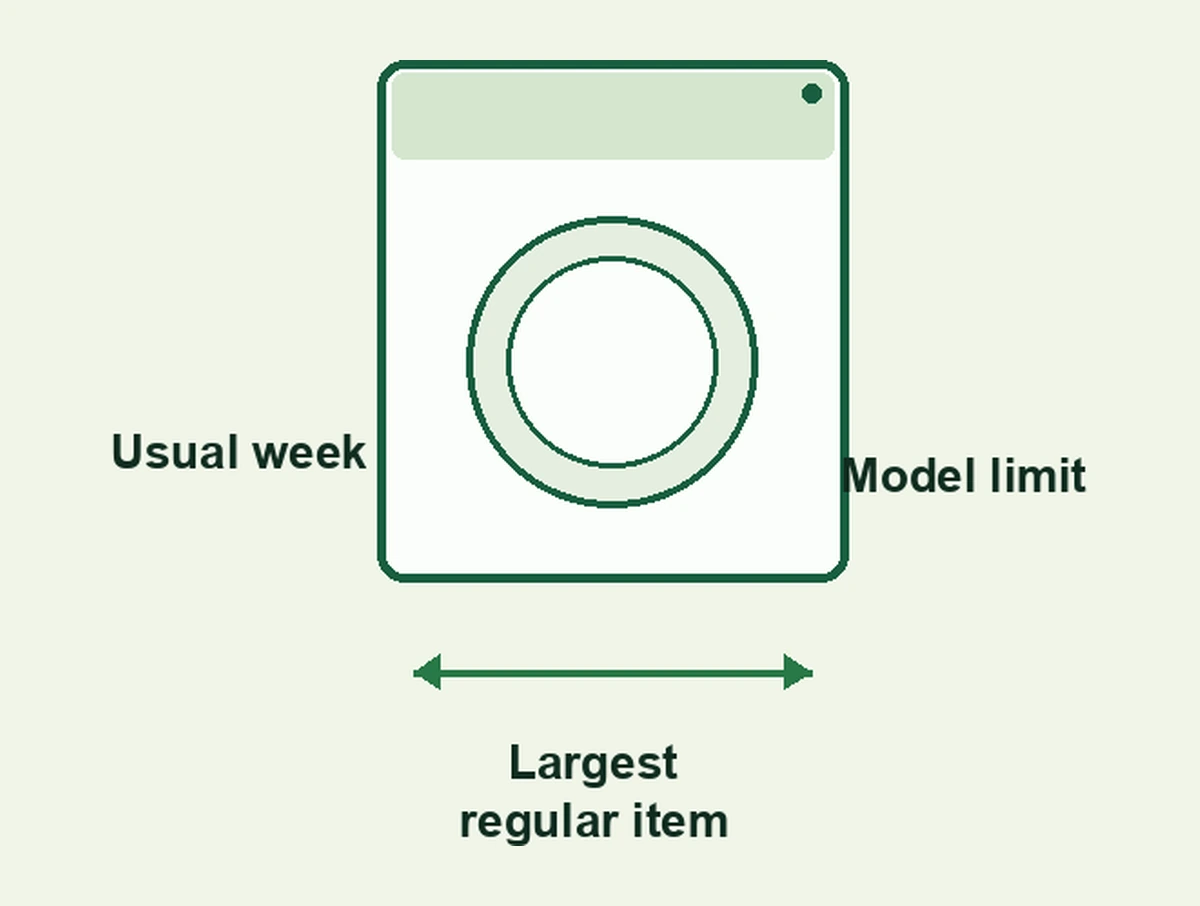
| Check | What to verify |
|---|---|
Usual load | Start with a normal week |
Bulky load | Check care and model instructions |
Space | Compare door or lid clearance |
Assessing Your Actual Laundry Loads
The right washer capacity depends on what you wash most often, not just the number of people in your home. Start by sorting your laundry from a typical week. Include items like sheets, towels, and any bulky bedding you use regularly.
Look at the care labels on your largest items. Some comforters, for example, require extra room to move freely during washing. If your apartment has a queen or king bed, check if the comforter label recommends a “large capacity” machine or gives any minimum size. If it does, bring this information to Robust Rentals when you ask about available models.
For smaller households, everyday loads may not fill a large washer. Overloading or underloading can affect cleaning and cause extra wear on your clothes. If you consistently have small loads, a smaller-capacity washer might be more efficient and gentle on your laundry.
Fitting the Washer Into Your Apartment
Before you choose washer capacity for apartment laundry, measure the actual space where the washer will go. Start with the width, depth, and height of the area, and note any obstacles like cabinets, water heaters, or doors that swing into the space. Remember to check the path from your entryway to the laundry area, tight hallways and turns can limit what size machine can be delivered.
Washer doors and drawers need room to open fully. If your space is in a closet or alcove, measure how far the washer door can swing and whether you can reach inside comfortably. If you’re considering a side-by-side set, factor in the space for both machines plus any needed gap between them.
Always confirm the model’s dimensions with Robust Rentals before booking. Even if a machine is listed as “apartment-sized” or “full-sized,” actual sizes and door clearances can vary. Robust Rentals can help you compare your measurements to available models and let you know if a certain washer will fit through your doors and into your laundry area.
Understanding Capacity: More Than Cubic Feet
Washer capacity is often listed in cubic feet, but this measurement alone doesn’t tell you if the machine meets your needs. The way you load the washer, the shape of the drum, and the arrangement of the agitator or impeller all affect how much you can wash at once.
Instead of focusing on a universal cubic foot number, use your usual laundry items as a guide. Place a week’s worth of clothes, towels, and bedding in a laundry basket and see how much space it takes up. Compare that to the washer’s drum size when you see it in person or in a video walkthrough.
Check the washer’s manual for its recommended load limits. Most manuals give guidance in terms of pounds of laundry or specific items (like “two queen sheets and four pillowcases”). Some will list maximum fill lines or weights for bulky items. Follow these recommendations closely, overloading can cause poor cleaning and possible machine issues.
If you have to wash something especially bulky (like a comforter, large dog bed, or heavy blankets), check both the item’s care label and the washer’s manual. Some washers are not designed for oversized items and may not clean them properly or could be damaged. If you only wash large items occasionally, you might be able to use a smaller washer for everyday loads and plan to use a laundromat or laundry service for those rare washes.
Reach, Loading, and Door Constraints
Not all apartment washers are equally easy to load or unload. Think about who will be using the machine and whether you or a family member has any mobility or reach concerns.
Front-load washers typically require bending down to load and unload. In a tight apartment space, make sure you can kneel or squat in front of the machine and that the door can open fully without hitting a wall or other obstacle. If the washer is going on a pedestal or a shelf, measure how high the door will be and whether you can still reach inside to grab small items from the back of the drum.
Top-load washers can be easier to access if you have trouble bending, but deep tubs may be hard to reach into for shorter people or those with limited arm mobility. Some apartment-sized top-loaders have shallower tubs, but you’ll need to confirm the actual model’s depth with Robust Rentals.
If your washer will be located in a closet or behind a door, consider how much space you’ll have to stand and move around while doing laundry. Small spaces can make it hard to load and unload, especially with larger or heavier items.
Quick Checklist: Washer Placement and Reach
- Measure the width, depth, and height of your laundry area.
- Check the path from your front door to the laundry area for tight corners.
- Make sure there’s enough space to open the washer door fully.
- Confirm you can reach all the way into the washer drum.
- Ask Robust Rentals for the model’s actual dimensions and door swing.
Example Scenario: Choosing for a Kansas City Apartment
Suppose you live in a two-bedroom apartment in Kansas City with a laundry closet that’s 33 inches wide and 30 inches deep, with a standard door opening into the hallway. You and your partner work full-time and do laundry once a week. Your bedding includes a queen comforter and fitted sheet, and you typically wash bath towels, kitchen towels, and a week’s worth of clothing.
First, you check the care label on your queen comforter. It says “Machine wash cold, large capacity washer recommended.” You look up the manual for a washer similar to what Robust Rentals lists and see that it can handle up to 15 pounds of laundry or a queen comforter, as long as the comforter is loaded loosely and the drum isn’t packed tight.
You measure your laundry closet and confirm that a standard washer will fit with about an inch of clearance on each side. However, the closet doors only open halfway, so the front of the washer will be partially blocked. You make sure that you’ll be able to crouch in front of the machine and swing the door open wide enough to load and unload bulky bedding.
Next, you place your usual weekly laundry in a basket and estimate that it fills about half the space of a typical washer drum. You realize that you won’t need a very large capacity machine for everyday loads, but you do want to be able to wash your comforter at home.
You contact Robust Rentals and give them your measurements, along with the care label recommendation for your comforter. They confirm which models can handle a queen comforter and fit in your closet. You ask for a written quote and review the monthly billing, minimum rental period, and service details before deciding.
Balancing Laundry Needs With Apartment Constraints
Choosing washer capacity for an apartment is about balancing your actual laundry habits with the physical constraints of your space. If you rarely wash large items, a smaller washer could be easier to fit and more efficient. If you need to clean bulky bedding or wash for several people at once, a larger capacity is more practical, provided you have the space and access.
Think about your laundry schedule. If you prefer to do small loads more often, a compact washer may suit you better. If you save laundry for once a week or more, a larger drum can handle bigger loads and reduce the number of wash cycles.
Always check the washer’s manual for its recommended load size and care instructions. If you have items that specifically require a “large capacity” washer, don’t assume all full-size machines will work, ask Robust Rentals to confirm which models fit your needs.
If you’re sharing laundry duties with roommates or family, consider everyone’s reach and access. A washer that’s too deep or hard to access can be frustrating, especially in a tight apartment laundry area.
When in doubt, bring your measurements and laundry needs to Robust Rentals. They can help you compare available models and answer questions about fit and function for your particular apartment.
When to Size Up or Down: Nuanced Washer Capacity Scenarios
Washer capacity for apartment living is not just about fitting the machine in the space, it’s about how the washer will handle your specific laundry habits, bulky items, and physical access. Because Robust Rentals offers individual machines and paired sets for Kansas City renters, it’s important to think through scenarios that can nudge your decision one way or another. Let’s explore several situations where the right washer capacity becomes a more personal choice.
Scenario 1: Frequent Wash Days, Small Loads
If you find yourself washing two or three times a week but only have a few items each time, a washer with a modest capacity may be more practical. This is common for singles, roommates who don’t combine loads, or anyone who prefers to wash delicates, workout wear, or uniforms separately.
- What to look for: A model that comfortably holds the largest of your typical loads, such as a full set of bedding or a week’s worth of shirts and undergarments, without leaving the drum mostly empty.
- Cautions: Overloading a small washer or washing just a couple of pieces in a large one can both lead to poor cleaning and extra wear.
- Practical step: Review your past laundry habits for the average and maximum number of items per load. Use the model’s manual or care label guidance to estimate fit.
Scenario 2: Bulky Items and Occasional Large Loads
Even if most of your laundry is regular clothing, you may need to wash bulky bedding, coats, or pet blankets. In some Kansas City apartments, storing extra linens or outerwear is common, and occasionally washing these items can stretch a small washer’s limits.
- What to look for: Check the care labels on your bulkiest items (comforters, winter coats, large towels). Some specify “commercial washer only,” but many can be cleaned in a residential machine if the drum is large enough for the item to move freely.
- Cautions: Forcing a comforter or heavy blanket into a drum that’s too small can damage both the washer and the item. If in doubt, use a laundromat for oversize pieces.
- Practical step: Before choosing a washer, try placing your bulkiest item inside a similar-sized drum (if accessible) or measure it folded and compare to the washer’s listed load guidelines.
Scenario 3: Family or Shared Apartment Laundry
For households with two or more people, partners, families, or roommates sharing a washer, the combined laundry can quickly exceed the capacity of a smaller machine. Larger-capacity washers can reduce the number of loads but may require more space and higher water usage per cycle.
- What to look for: A washer that can handle a full week’s laundry for all users or, at minimum, the largest combined bedding set you’ll need to wash. Always check the manual for recommended load sizes by item type.
- Cautions: Overstuffing to save time can result in poorly cleaned clothes and increased mechanical strain.
- Practical step: Gather a typical mixed load (jeans, towels, shirts, socks) for all users. If you can fit this in the washer with room to tumble, the size is likely suitable.
Scenario 4: Limited Reach or Mobility Concerns
Washer placement in some apartments means you may be reaching over a countertop or into a closet. If you have mobility limitations or shorter reach, a deep drum can be frustrating or even unsafe.
- What to look for: A washer with a drum depth you can access comfortably. For front-loaders, ensure the door opens fully in your space, and you can reach the back wall of the drum without strain.
- Cautions: Don’t rely on outside averages, refer to the model’s manual or ask Robust Rentals for access details if you’re unsure.
- Practical step: If possible, visit a showroom or delivery location to test the reach, or use a tape measure to simulate loading and unloading in your intended spot.
Actionable Worksheet: Estimating Your Washer Capacity Needs
Use this simple worksheet to help clarify your decision, keeping in mind that actual cubic feet measurements can vary by model and are not a universal standard. Always confirm fit and compatibility with Robust Rentals.
Step 1: List Your Largest Regular Loads
- What’s the biggest load you wash at home? (e.g., king bedding, four towels and sheets, a week’s clothes)
- Are there items you always take to a laundromat? (If so, do you want to change that?)
Step 2: Check Care Labels and Manual Guidance
- For each item, check the care label for washing machine requirements.
- Look up the model’s manual (ask Robust for a copy) for recommended load types and maximums.
Step 3: Consider Placement and Access
- Measure the space available for the washer, including door swing and any cabinets or walls.
- Simulate loading/unloading, can you reach the bottom of the drum or back of the tub easily?
Step 4: Estimate Weekly Laundry Volume
- Count the number of loads you do per week.
- If you want to reduce the number of loads, consider whether a larger capacity would help, or if your space limits make a smaller machine the right choice.
Step 5: Note Special Needs
- List any non-clothing items you regularly wash (pet beds, pillows, curtains).
- Note any physical access needs (height, reach, door clearance).
Example Worksheet (Hypothetical):
- Largest load: Queen comforter and two pillow shams.
- Care label: “Machine wash cold, gentle cycle, tumble dry low.”
- Model manual: States max bedding load is “one queen comforter, two pillows.”
- Placement: Closet with bifold doors. must clear 24 inches for door swing.
- Weekly volume: Two loads (clothes), one load (towels/bedding).
- Special needs: Must be able to reach back of drum without stepping on stool.
Decision: Select a washer with a drum depth that allows reaching the back comfortably, and manual confirms it can handle a queen comforter. Placement and door swing verified with a tape measure.
Frequently Asked Questions
How do I know if my bulky bedding will fit in an apartment washer?
Always check the care label on your bedding first for washing instructions. Next, ask Robust Rentals for the model manual or load guidelines, which often specify maximum bedding sizes (e.g., twin, queen, or king comforter). If the manual is unclear, err on the side of caution, bulky bedding should be able to move freely in the drum. For oversized or commercial-only items, a laundromat may be best.
Is a bigger washer always better for apartment living?
Not always. Larger washers take up more space and may require more water and electricity. If your usual loads are small or you have limited reach, a more compact machine may be easier to use and more efficient. Make your decision based on your actual laundry needs, available space, and physical comfort, not just drum size.
Can I rent just one washer from Robust Rentals, or do I need a set?
You can rent a single washer or a washer and dryer set through Robust Rentals. Pricing is advertised per machine, with monthly billing and a three-month minimum. Always request a written quote to confirm the total amount due and terms.
What if the washer doesn’t fit my apartment or hookups?
Before renting, confirm your existing hookups and measure your space, including doorways and placement area. If you’re unsure, contact Robust Rentals for model compatibility and guidance. Never attempt to modify hookups or install a washer yourself, qualified help should handle any uncertain connections.
How do I avoid overloading or underloading the washer?
Refer to the washer’s manual for recommended load sizes. Overloading can prevent clothes from getting clean and may damage the machine. Underloading wastes water and energy. If you routinely wash small loads, a smaller capacity washer may be best. For mixed or larger loads, ensure there’s enough room in the drum for items to move freely.
Your Next Step: Confirm Your Fit and Model With Robust Rentals
Once you’ve assessed your laundry habits, measured your space, and checked care labels for your bulkiest items, reach out to Robust Rentals for a written quote and model options compatible with your apartment. Ask for the manual for any model you’re considering, and use it to double-check capacity, loading, and care recommendations. This ensures your chosen washer supports your routine, without surprise limitations or mismatches.
Rental options and related guides
See current washer and dryer rental options
Check delivery at your Kansas City address · Check apartment washer and dryer hookups