
Is an All-in-One Washer Dryer a Good Fit for an Apartment?
An all-in-one washer dryer can fit an apartment with room for one appliance when the building allows it and the exact model matches the hookups. The same drum washes and dries, so one load occupies the machine through both stages. Compare the model’s dry capacity, total cycle time, and water-handling requirements with a typical laundry week.
| Check | What to verify |
|---|---|
Batch size | Read the dry capacity first |
Cycle time | Plan back-to-back loads |
Fallback | Keep a place for air-drying |
How a Washer Dryer Combo Differs From Separate Machines
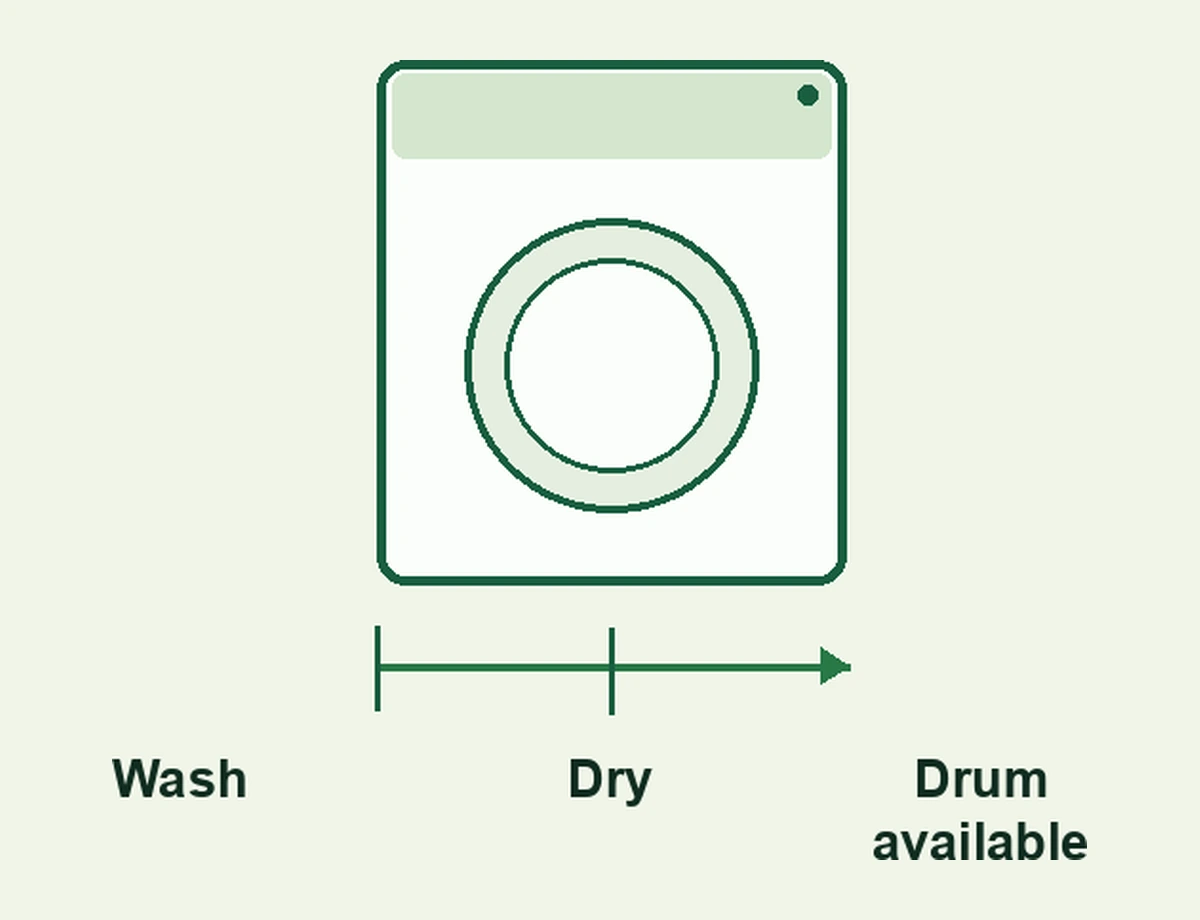
A washer and dryer combo for apartments is a single machine that handles both washing and drying in one drum. This format is designed for small spaces where adding a full-size washer and a separate dryer isn’t possible. The combo plugs into one set of hookups and does not require transferring clothes between machines.
What sets these units apart is the way they handle laundry cycles. Instead of running a wash load and starting a new one in the washer while the first load dries in the dryer, a combo machine can only process one batch of laundry at a time. This means the entire wash-and-dry sequence takes place back-to-back in the same drum, and you cannot start a second load until the full cycle completes.
Drying capacity is often less than the washing capacity. For example, while you may be able to wash a full basket of clothes, the machine may recommend drying only half that amount at a time for best results. This is due to differences in how water is removed compared to a standalone dryer. It’s important to check the combo model’s manual for specific load recommendations.
Traditional side-by-side washer and dryer sets, like those available from Robust Rentals, let you wash a second load while drying the first. This overlapping schedule increases throughput, making it easier to catch up on laundry after a busy week.
Throughput: Laundry Volume and Scheduling in Apartment Life
For many apartment residents, the main challenge is finding a laundry solution that matches their weekly volume and fits their schedule. Throughput, in this context, means how many loads you can complete in a given time block, such as a Saturday afternoon or a couple of evenings during the week.
With a washer dryer combo, the entire cycle time is longer than using separate machines because you cannot run two loads at once. Typical wash-and-dry cycles may take between three to five hours per load, depending on settings and fabric type. If you usually wash and dry three loads each weekend, you could be looking at an all-day process with a combo unit.
In contrast, with separate machines, you could start a second wash load as soon as the first one finishes, while the dryer handles the first batch. This overlap can cut total laundry time in half or more. If you share your apartment with others or have children, this difference can be significant.
Here’s a hypothetical example:
- Suppose you have three laundry loads to process and a combo machine that takes four hours per full cycle. You’d spend 12 hours to finish all three loads, since each must complete before the next begins.
- With separate washer and dryer units, the first load might finish washing in 45 minutes and move to the dryer. The second load starts washing immediately. If each dryer cycle takes about an hour, you could finish all three loads in roughly four to five hours, due to overlapping cycles.
These are illustrative numbers. actual times vary by model and fabric. Always check the appliance’s manual for the most accurate cycle timing.
Drying Space and Apartment Considerations
Another factor that shapes the decision is the space available for drying laundry. In many Kansas City apartments, there’s limited room to air-dry clothes indoors, and building rules may restrict outdoor drying. This makes the performance of the appliance’s drying function even more important.
Washer dryer combos often use a different drying method than standalone dryers, which can result in longer dry times and less effective moisture removal for bulky or heavy items. Towels, bedding, and thick fabrics may need extra time or even a second dry cycle.
If you regularly wash large or heavy loads, or if you prefer your laundry fully dry and ready to put away immediately, it’s important to factor in the combo unit’s drying performance. Some users find they need to remove part of the load after washing to avoid overfilling the dryer. Others may hang-dry a portion of their laundry to speed up the process or avoid wrinkles.
A separate dryer, like those available from rental companies such as Robust Rentals, may offer more robust drying for larger loads. However, these require enough space and the correct hookups. Confirm compatibility with your apartment before renting.
One-Drum Scheduling: Planning Around Appliance Format
The one-drum nature of a washer dryer combo means that your laundry schedule must adapt to the appliance, rather than the other way around. Since you can’t start a new load until the previous one has finished both washing and drying, it’s important to plan your laundry day in longer blocks or be prepared for overnight cycles.
Here’s how the schedule typically changes:
- With a combo machine, expect to commit to a full cycle before starting another load. This could mean running laundry overnight or starting early in the morning to finish by evening.
- If you have a busy household or limited time at home, the inability to overlap loads may create bottlenecks, especially if you need specific items ready for work or school.
- Some combo models have delay start or end-of-cycle alerts, which can help you coordinate with your daily routine. Check the manual for available features.
A side-by-side washer and dryer set gives you more flexibility. You can stagger loads, prioritize urgent laundry, or divide chores among household members. This is especially useful if your apartment has the hookups and space for two machines.
Example Deciding for a Kansas City Apartment
Suppose you’re renting a one-bedroom apartment in Kansas City with a small laundry closet that fits only one standard-size machine. You live alone and do about two loads of laundry each week, mostly clothing and sheets. The closet has compatible hookups for a single appliance, but not for both a washer and a dryer.
You’re considering a washer and dryer combo for apartments because:
- There’s only space for one machine.
- You don’t have a balcony or enough indoor space to air-dry large items.
- Your building doesn’t offer shared laundry facilities.
In this scenario, a washer dryer combo could be a reasonable choice. With two loads per week, you can run one overnight and the other during the day. The longer cycle time is manageable since you don’t have a high volume of laundry. You’ll want to check the combo model’s drying performance, especially for sheets or heavier items, and possibly plan to hang-dry a few pieces if needed.
If your apartment did have space and hookups for a side-by-side set, renting separate machines could save you several hours each week and give you more flexibility in managing laundry for guests or a future roommate. Confirm model compatibility with Robust Rentals before making a decision.
Quick Checklist for Apartment Laundry Planning
- Measure your laundry space and check for hookups.
- Estimate your typical weekly laundry loads and fabric types.
- Decide how much time you can commit to laundry in one block.
- Consider whether you need to dry large or bulky items regularly.
- Check appliance manuals for load sizes and cycle times.
- Confirm model compatibility and terms with your rental provider.
- Plan for longer cycle times with a combo, or overlapping loads with two machines.
Apartment Utility and Installation Considerations
Before selecting a washer and dryer combo for apartments, review your apartment’s utility setup. Most Kansas City apartments have standard laundry hookups, but the exact type and location can vary. Combo units may need only a single set of hookups, which fits many apartment closets or utility nooks.
For installation, always follow the model’s manual and use qualified help to connect hoses and power safely. Some apartment buildings have specific requirements or restrictions for appliance installation. If you’re renting, check with your building manager before delivery.
Rental companies like Robust Rentals require compatible existing hookups. If you’re unsure about fit or connection, request a walkthrough or ask for help verifying compatibility before scheduling delivery. Service is included during your rental term, which can be helpful if you encounter any mechanical issues.
Keep in mind that combo units may take longer to dry loads and could require additional care to prevent moisture buildup in small laundry spaces. Ventilation and regular cleaning can help keep your machine running efficiently. Always refer to the model manual for cleaning and maintenance steps.
Living With an All-in-One Washer Dryer: Real-World Scenarios
Choosing a washer and dryer combo for apartments is only the first step. How it fits into daily life depends on your habits, household size, and building features. Here are several scenarios that highlight the strengths and tradeoffs of all-in-one units compared to separate machines.
Scenario 1: Solo Renter With Flexible Hours
If you live alone, laundry loads are typically smaller and less frequent. An all-in-one unit’s single-drum process means you can toss in a mixed load before heading out and return to clean, dry clothes. The longer cycle time isn’t a problem if you’re not waiting around, but you may need to schedule loads to avoid running the machine overnight if your building restricts noise after certain hours.
Key takeaway: For solo renters, the main adjustment is remembering to start loads early enough to finish before you need the items again. The convenience of not transferring loads can outweigh the longer total cycle time.
Scenario 2: Couple With Back-to-Back Commitments
Two people generate more laundry, often with overlapping needs for uniforms or workout gear. With an all-in-one washer dryer combo, only one load can run at a time, and drying cycles can take longer than wash cycles. If both of you need specific clothes clean by morning, you’ll need to plan for a longer window or consider splitting loads by day.
If your apartment has space for a drying rack, you can remove some items after washing and air-dry them while the rest finish drying in the machine. This can speed up your overall laundry process, but it means handling wet laundry partway through.
Key takeaway: For couples, communication and advance planning are key. Use the combo’s delay start features if available, and consider partial air drying for time-sensitive items.
Scenario 3: Family With Children
A small family will quickly test the throughput limits of an all-in-one washer dryer in an apartment. Larger loads may not dry evenly, and multiple back-to-back cycles can stretch into a full day. If you’re used to doing several loads in one evening, expect to adjust your routine.
Some families solve this by running a load every night or morning, rather than batching laundry on weekends. This helps prevent a backlog, but requires more frequent attention. If your building has a shared laundry room, you might supplement the combo with occasional trips for large bedding or catch-up loads.
Key takeaway: Families should expect to run smaller, more frequent loads and may need to supplement with shared facilities for peak laundry needs.
Scenario 4: Apartment With Limited Electrical or Water Supply
Some older apartment buildings in Kansas City have restrictions on water pressure or electrical circuits. Washer dryer combos tend to draw less power and water per cycle than separate full-size machines, but total run time is longer.
If your building has a history of tripped breakers, slow water refills, or plumbing quirks, confirm compatibility with your landlord and Robust Rentals before ordering. Check whether the combo’s required connections match your hookups, and ask about any building-specific guidelines.
Key takeaway: Confirm all-in-one unit requirements with your building and Robust. In some cases, a combo may be the only solution that fits both the space and the utility setup.
Apartment Laundry Planning: Worked Example
Meet Alex:
- Lives in a one-bedroom apartment
- Has a small laundry closet with hookups
- Works 9-to-5, travels on weekends
- Does laundry for one person, mostly casual clothes and linens
Alex’s laundry needs:
- 2–3 loads per week
- Wants to avoid late-night laundry
- No space for a large drying rack
Step 1: Estimate Cycle Time Alex checks the manual for the washer dryer combo model available from Robust. The typical cycle is 2.5–3 hours from dirty to dry (actual time varies by settings and load size).
Step 2: Map Out Laundry Windows With a 9-to-5 job, Alex prefers to run laundry in the evening or early morning. Since the combo is quieter than shared laundry rooms, Alex can start a load at 6 p.m. and have it done by 9 p.m.
Step 3: Plan for Busy Weeks If Alex needs two loads done before a trip, both loads will take about 6 hours total. This means starting the first load right after work and the second before bedtime, or running one load overnight if allowed by building rules.
Step 4: Adjust for Space With no room for a drying rack, Alex relies on the combo’s drying function. Delicate items are washed on gentle and hung on closet doors to air dry.
Step 5: Decide Alex finds the all-in-one washer dryer combo for apartments meets most needs with some schedule tweaks. For the occasional heavy bedding load, Alex plans to use the building’s shared machines.
Specialized Use Cases: What Else to Consider
While most renters will fit one of the scenarios above, a few specialized situations deserve mention.
Laundry for Allergy Sufferers
If you or a family member has allergies, you might need to wash bedding and clothes more often at high temperatures. Some all-in-one units offer allergen or sanitize cycles, but these may extend total run time even further. Double-check that the combo model can handle these cycles and that your building’s water heater supports high-temp wash.
Home-Based Businesses or Frequent Guests
If you run a home-based business that generates laundry (such as pet grooming or massage therapy) or often host overnight guests, your laundry volume may spike. All-in-one units are not designed for commercial throughput. In these cases, consider a schedule that spaces out loads, or use shared laundry facilities for peak times.
Mobility or Accessibility Needs
Some renters prefer all-in-one units because they reduce the need to transfer heavy wet laundry between machines. If you have limited mobility, confirm that the combo controls are easy to reach and the door opens in a usable direction. Ask Robust about available models that fit your needs.
Seasonal or Bulky Items
Blankets, duvets, and coats can exceed the effective drum size of a washer dryer combo. Even if they fit, they may not dry thoroughly in one cycle. Plan to use building machines or a laundromat for these items, or break up loads into smaller batches.
Apartment Laundry Decision Worksheet
Use this worksheet to clarify your needs and decide if a washer and dryer combo for apartments will work for your household.
1. How many people will use the machine?
- 1
- 2
- 3+
2. How many loads do you do per week?
- 1–2
- 3–4
- 5+
3. Do you need certain items turned around in a few hours?
- Yes
- No
4. Do you have space for a drying rack or hanging bar?
- Yes
- No
5. Are your apartment’s hookups compatible with an all-in-one unit?
- Confirm with Robust before renting.
6. Does your building have noise or time restrictions?
- Yes
- No
7. Any special laundry needs (allergies, business, bulky items)?
- List here: _________
If you answered “Yes” to #3, have 3+ people, or do 5+ loads per week:
- An all-in-one unit may require careful scheduling or supplemental solutions.
- Consider how often you need to turn over loads quickly.
If you answered “No” to #4 and rely on the combo’s dryer:
- Make sure your building allows longer drying cycles and that your schedule is flexible.
If you answered “No” to #5:
- Stop and check with Robust for compatible models and requirements.
FAQs: Washer Dryer Combos in Apartments
How long does a full cycle take in an all-in-one washer dryer?
Cycle times vary by model and settings, but expect 2.5 to 4 hours from dirty to dry for a standard mixed load. Heavier or larger loads can take longer. Check the appliance manual for details.
Can I interrupt a cycle to add or remove items?
Most combos allow you to pause during the wash phase to add forgotten items, but once the drying cycle starts, the door typically locks for safety. Plan loads in advance to avoid mid-cycle changes.
Will my clothes dry completely in a combo unit?
Most everyday items dry thoroughly, but very thick or bulky items may need extra drying time or air drying. If you notice damp spots, try smaller loads or remove some items to air dry.
Is an all-in-one washer dryer energy efficient?
Energy use depends on the model, load size, and settings. Combos generally use less energy than running two separate machines for the same size load, but total run time is longer. Energy efficiency ratings and water use can be found in the model documentation.
What if my apartment’s hookups are different from what the combo needs?
You must have compatible hookups for the all-in-one washer dryer. Robust Rentals can help confirm if your apartment setup matches their available models. Do not attempt to modify plumbing or electrical connections without qualified help.
Confirm Your Apartment’s Compatibility
Before making a decision, review your apartment’s laundry space, schedule, and hookups. Reach out to Robust Rentals for a written quote and to confirm which washer and dryer combo models match your building. Bring your worksheet answers and any building rules to the conversation. This will help you get the best fit for your apartment and avoid surprises when it’s time to start your first load.
Rental options and related guides
See current washer and dryer rental options
Check delivery at your Kansas City address · Check apartment washer and dryer hookups