
Choosing a Washer and Dryer for an Apartment Floor Plan
Choose apartment laundry equipment by measuring the space the machines occupy and the space you need to use them. A side-by-side pair needs enough clear width for both machines. A listed stack trades width for height, while an all-in-one machine needs space for a single door and may change how you schedule loads.
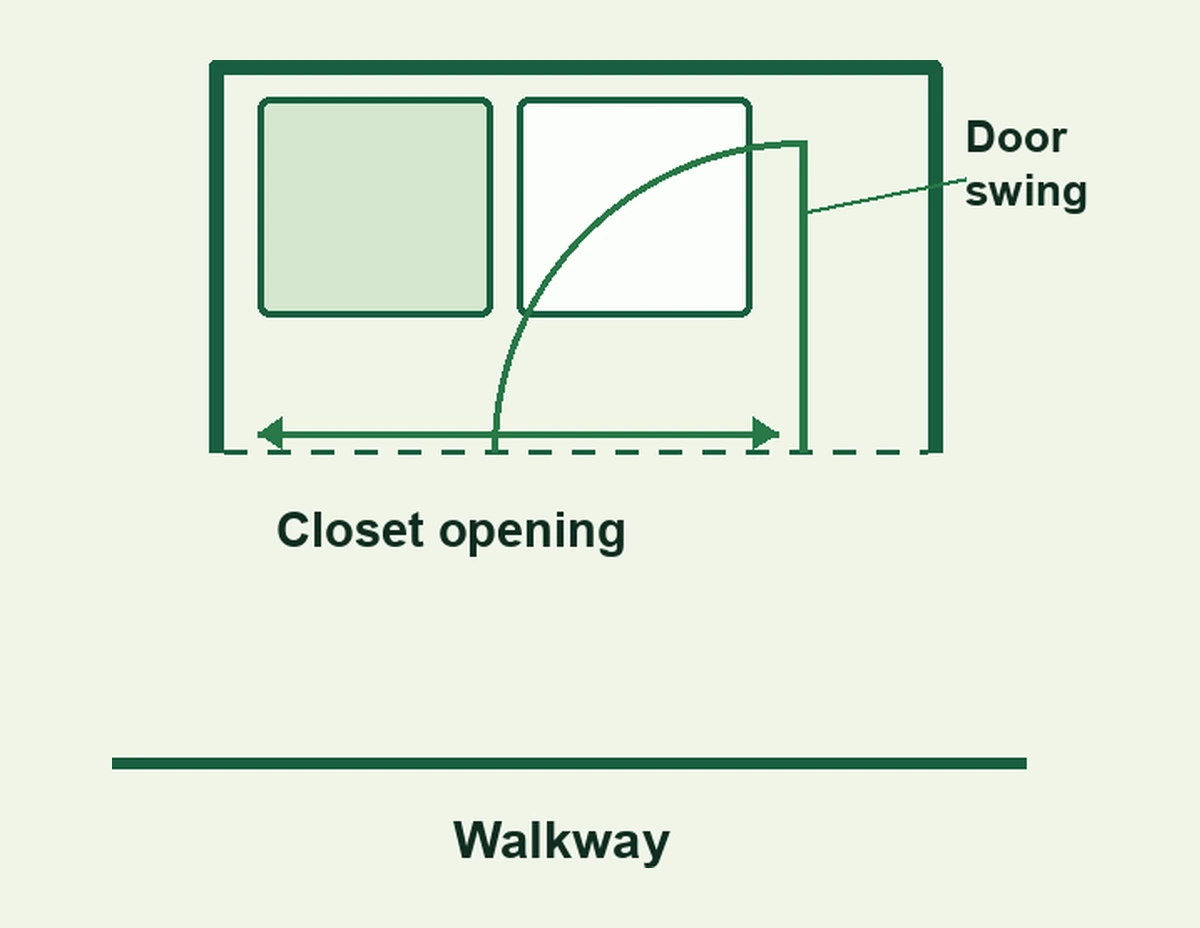
| Check | What to verify |
|---|---|
Closet | Measure the clear opening |
Walkway | Draw the door swing |
Format | Compare installation footprints |
Understanding Your Laundry Space: Closet Footprint and Layout
Every apartment is different, but most Kansas City units with hookups for a washer and dryer have one of three layouts: a hallway closet with doors, a utility nook open to the kitchen, or a dedicated laundry room. Start by measuring the width, depth, and height of your laundry area. Don’t rely on your lease listing or past rentals, actual dimensions can vary by several inches, and that can make or break a fit.
Measuring the Closet or Nook
Use a tape measure and check:
- The width, from wall to wall or trim to trim
- The depth, from the back wall to the closet doors or the front edge of any trim
- The clear height from floor to any shelf or cabinet
Write these numbers down and double-check for pipes, outlets, or shelves that stick out. If your closet has a folding or sliding door, measure the opening width and the usable depth with the door fully open. If the door is hinged, note which way it swings and how far.
Considering Floor Transitions and Thresholds
Some closets have a lip or raised threshold. Measure from the highest point of the threshold to the top of the space. Also, check if there’s a step up or down into the laundry area, which can affect how machines are moved in.
Allowing for Delivery and Setup
Even if a washer and dryer fit inside the closet, they need to get there. Measure the width of your hallways, doorways, and any sharp corners between the building entrance and your laundry space. Make a note of tight spots. If you live in a building with elevators or narrow stairs, ask your property manager about delivery access.
Planning for Traffic: How Laundry Affects Everyday Movement
Laundry machines can block hallways, doors, or even kitchen areas if not planned correctly. Before you rent a washer and dryer for apartments, think about how people move through your space, especially during laundry days.
Walking Paths and Shared Spaces
If your laundry closet opens into a hallway, check how far the doors swing out. Will they block a main walkway? In small apartments, a door that sticks out even 24 inches can make it hard to pass through with laundry baskets, groceries, or children in tow.
If the washer and dryer are in a kitchen or bathroom nook, consider how open doors will affect meal prep, cleaning, or other daily routines. If the machines will be side-by-side, double the width and make sure both doors can open fully.
Impact on Room Use
Some apartments have laundry closets that open into bedrooms or living rooms. Think about noise and vibration, as well as whether open doors will block furniture or cut off access to closets or windows. If you use the area for storage, will you need to move bins or shelves every time you do laundry?
Temporary Obstacles During Use
Remember that doing laundry means leaving the washer or dryer door open at times, whether for loading, unloading, or air drying. Plan for a little extra space in front of the machines, not just for the appliances themselves.
Quick Checklist: Traffic and Access
- Will laundry doors block hallways or main room entries?
- Do you have enough space to open both washer and dryer doors fully?
- Is there space to stand in front of the machines with the doors open?
- Will laundry baskets or hampers fit in the area?
- Is there a clear path for delivery without tight corners or steps?
Dealing with Front Access and Door Swings
Most apartment washers and dryers rented through Robust Rentals are standard freestanding models with front access. The way the doors open, either left or right hinged, can make a big difference in how easy it is to use your machines. Take time to figure out which door swing works best for your space.
Identifying Potential Conflicts
Check whether your laundry closet doors open towards the laundry machines or away from them. If your closet has bi-fold or sliding doors, you may have more flexibility, but a hinged closet door can easily block a machine door or make it impossible to load and unload.
For machines themselves, note which direction the washer and dryer doors open. If both swing the same way, you may need to reach awkwardly or back up each time you transfer laundry. Some washer and dryer models offer reversible doors, but not all do, confirm with Robust Rentals before you sign up.
Planning for Door Clearance
Allow extra room in front of each machine for the door to swing open fully. This is especially important in tight closets or when machines are installed side-by-side. If you have folding doors, make sure they can open at least 90 degrees without hitting the machines.
In apartments with very limited depth, check whether the doors can open without hitting the wall behind you. If you have to stand sideways or squeeze between machines and a wall, using your laundry setup can become frustrating quickly.
Working Around Fixed Obstacles
If your apartment has a permanent shelf, water heater, or utility box near the laundry hookups, factor these into your plan. A door that swings into a shelf or pipe may not open all the way. Also, check for light switches, outlets, or thermostats that could be blocked.
If you’re unsure, take photos and measurements, and ask Robust Rentals for guidance on compatible models and door swings. Their team can confirm if a specific washer and dryer for apartments will fit your closet and open fully.
Example Fitting a Washer and Dryer in a Hallway Closet
Step-by-Step Reasoning
- Measure the space. The closet has enough width for two cabinets in this example. Ask for the exact model depths and compare the rear connection allowances and door projection with the usable depth.
- Check Door Swings: The closet doors open into the hallway, but if both washer and dryer doors swing left, the washer door could hit the closet frame or block the dryer. In this case, a right-swing dryer door and a left-swing washer door would be ideal, but confirm with Robust Rentals if this is possible.
- Traffic Flow: With both closet doors open, the hallway narrows, but there’s still about three feet of passable space. This is tight but usable for most households. Plan to close one closet door when not actively loading or unloading.
- Allow for Delivery: The apartment entrance and hallway are 32 inches wide, so delivery should be possible for most models, but check if there are any sharp turns. If the shelf is too low, it might need to be removed or adjusted before installation.
- Confirm with Rental Team: With your measurements and door preferences, contact Robust Rentals and ask for compatible washer and dryer models that fit your space and allow for the door swings you need.
Hypothetical Budget Example
Handoff to Setup and Next Steps
Once you’ve chosen a washer and dryer for apartments that fits your floor plan, the next step is preparing for delivery and installation. Robust Rentals requires compatible existing hookups, but not every apartment has the same setup. This section focuses on what you can do to make setup smooth, without handling any utilities yourself.
Preparing the Space
Clear out any items stored in your laundry closet or nook, including shelves, bins, or cleaning supplies. Make sure the floor is dry and free of debris. If you have a shelf that sits lower than the height of the machines, consider removing it or raising it before delivery.
Check that your closet doors can open fully and that there’s a clear path from your front door to the laundry area. If you live in a secure building, arrange for delivery access with your property manager.
Confirming Model Compatibility
Send your measurements and photos to Robust Rentals for confirmation. Ask specifically about:
- The maximum width and depth of machines that will fit your closet
- Which washer and dryer models have doors that swing in your preferred direction
- Any special requirements for installation in your apartment’s layout
Do not attempt to modify hookups or install machines yourself. If there is any uncertainty about fit or connections, review the model manuals and rely on qualified help provided by Robust Rentals.
What to Expect on Delivery Day
If at any point you’re unsure about your apartment’s suitability for a washer and dryer, ask for a written quote and setup details. This ensures there are no surprises on billing, fees, or pickup terms.
Managing Hinged Door Conflicts in Tight Apartment Spaces
In many Kansas City apartments, laundry appliances must fit into closets, alcoves, or narrow hallways. The way washer and dryer doors open, called the door swing, can make or break the daily usability of your laundry setup. Unlike top-load machines, most apartment-friendly washers and dryers have front-facing doors that swing out on hinges. This creates a zone in front of each unit that must stay clear for safe and comfortable use.
Mapping Out Door Swings
Start by standing in front of your intended laundry spot. Open any closet, room, or cabinet doors that are nearby, and note where they swing. Next, picture the washer and dryer doors opening fully. Some machines have doors that open to the left, some to the right, and some can be switched by a technician. If you don’t know which way your rented model opens, ask Robust Rentals before delivery.
Using painter’s tape, mark the arc of the appliance doors on the floor. Do the same with nearby doors. If the arcs overlap, you may have a conflict. Pay attention to:
- Closets or room doors that block the laundry area when open
- Doors that could hit or trap the washer or dryer door
- Narrow spots where an open appliance door blocks traffic flow
If you find a conflict, consider rearranging the order of appliances, reversing a door swing (when possible), or moving nearby furniture. Some setups work best with the washer and dryer reversed from the typical left-to-right order. Robust can often provide information about door swing options for their available models.
Planning for Laundry Handoff
The handoff, the process of moving wet laundry from washer to dryer, should be smooth and safe. In a narrow closet or hallway, door swings can force awkward twisting or reaching. Here’s how to plan for the handoff:
- Stand in the space and pantomime moving clothes from washer to dryer with both doors open.
- Check that you have space to bend, lift, and turn.
- Make sure you won’t block a hallway or trap yourself between doors.
- If one door opens against a wall, confirm you can still reach inside.
If you discover the doors will force you to reach over or around an obstacle, ask Robust Rentals if the washer or dryer door swing can be reversed. Some models support this, but not all. If not, you may need to adjust the position of the appliances or choose a different closet.
When Stacking Isn’t an Option
In some apartments, stacking a washer and dryer isn’t allowed or possible. Freestanding side-by-side machines are more common in Robust’s listings. This arrangement can make door swing conflicts more likely in tight closets or along hallways. If you must use side-by-side units, double-check that both doors can open at least 90 degrees without hitting each other or other doors.
In extra-narrow spaces, try to position the machines so their doors open away from each other, or consider leaving more space on one side for easier access. If the closet is just wide enough for the appliances, make sure you can still reach both doors comfortably when open.
Nuanced Scenarios: Real Apartment Layout Challenges
Every apartment is different. Here are three scenarios based on common Kansas City apartment layouts and how to handle washer and dryer for apartments in each.
Scenario 1: Hallway Closet With Outward-Swinging Doors
You live in a mid-rise with a hallway laundry closet. The closet has double doors that swing out into the hallway, and the washer and dryer will sit side by side. When both closet doors are open, there’s just enough room to stand in front.
Challenges:
- Both closet doors must remain fully open during use.
- The appliance doors must also swing open, possibly into the hallway.
- If the laundry doors and closet doors open in the same direction, they may block each other.
Solution Steps:
- Measure the hallway width with both closet doors open.
- Confirm with Robust which way the washer and dryer doors open.
- If both appliance doors open toward the closet doors, request a model with a reversible door or swap the order of the units.
- Use painter’s tape to mark door swings and practice the laundry handoff.
- Consider laundry times when hallway traffic is lightest.
Scenario 2: Bedroom Nook With a Left Wall
Your apartment’s laundry nook is in the primary bedroom, with the left side against a permanent wall and the right side open. The machines will be installed side by side. The washer door opens to the left and the dryer to the right.
Challenges:
- The washer door may hit the left wall, limiting access.
- The handoff from washer to dryer may be awkward if the doors open away from each other.
Solution Steps:
- Measure the clearance between the washer and the left wall.
- Ask Robust if a right-opening washer is available.
- If not, ensure there is enough space to fully open the washer door and reach inside.
- Consider swapping the positions of the washer and dryer if hookups allow.
- Practice opening both doors to check for pinch points.
Scenario 3: Kitchen Closet With a Bifold Door
You have a laundry closet off the kitchen, closed by a bifold door. The closet is just deep enough for both machines. The bifold folds to the right, partially blocking the front of the right-side appliance.
Challenges:
- The bifold door may block access to the dryer.
- Carrying laundry through the kitchen increases foot traffic.
Solution Steps:
- Open the bifold door fully and mark the blocked area.
- Place the washer on the right if possible, as it’s used first.
- Check with Robust if the dryer door can be reversed to open away from the blocked area.
- Make sure you can still reach the dryer controls and drum.
- Schedule laundry times to avoid kitchen congestion.
Actionable Worksheet: Testing Your Space Before Delivery
Use this worksheet to avoid surprises when your washer and dryer for apartments arrive.
Step 1: Mark Out Appliance Footprints
- Use painter’s tape to outline where each machine will sit.
- Mark the front edge and both sides.
Step 2: Simulate Door Swings
- Place a large piece of cardboard where each appliance door will be.
- Tape one edge to the “hinge” side and swing it open to 90 and 135 degrees.
- Mark any overlap with walls, doors, or furniture.
Step 3: Open All Nearby Doors
- With the simulated appliance doors open, open any closet, cabinet, or room doors nearby.
- Check for blocked paths or pinch points.
Step 4: Practice the Laundry Handoff
- Stand in the marked space and mimic moving wet laundry from one “machine” to the other.
- Note any awkward reaches, blocked bends, or tight squeezes.
Step 5: Take Photos
- Snap photos of your setup and any conflicts.
- Share these with Robust Rentals when requesting a quote or compatibility check.
Step 6: Confirm With Robust
- Ask Robust Rentals to confirm that the washer and dryer models you’re considering will fit and operate as needed in your marked space.
- Request information on door swing direction and possible reversals.
Worked Example A Realistic Apartment Closet Assessment
Apartment: 2-bedroom, 1-bath unit near the Plaza, Kansas City Laundry Space: Hallway closet, 58" wide x 34" deep, with double doors that swing out Traffic: Hallway leads to bathroom and bedrooms
Process:
- Measure Closet and Hallway: The closet is wide enough for two standard-size machines. The hallway is 40" wide.
- Mark Appliance Footprints: Painter’s tape outlines two side-by-side footprints, with 1" space between and 2" clearance on each side.
- Simulate Door Swings: Using cardboard, both appliance doors are simulated to open 110 degrees. The left door opens toward the wall, the right toward the hallway.
- Check Conflicts: When both closet doors and both appliance doors are open, the right appliance door blocks most of the hallway.
- Practice Handoff: Standing between the open doors, there’s enough room for one person but not two. Carrying a laundry basket requires planning.
- Adjust Plan: Consider asking Robust if a right-hinged washer and left-hinged dryer are available, so doors open away from the center. If not, plan to do laundry during low-traffic hours.
Result: With careful planning and communication with Robust Rentals, the setup is workable for a single person at a time. Family or roommates should avoid the hallway during laundry use.
Apartment Laundry FAQs
What if my closet is too shallow for both machines?
Contact Robust Rentals with your closet measurements. They can help confirm if their available models will fit and discuss possible solutions if your space is unusually tight.
Can I request a specific door swing for my washer or dryer?
Some models allow the door hinge to be reversed, but not all. Ask Robust Rentals about available options before delivery. They can confirm if a left or right swing is possible for your unit.
How do I avoid blocking a hallway or entryway with open doors?
Map out the door swings before delivery. If possible, choose models or installation positions that open away from main traffic paths. Schedule laundry times when those areas are less busy.
Is it possible to stack Robust’s washers and dryers?
Robust Rentals generally lists freestanding, side-by-side units. Confirm current stacking options directly with Robust. If stacking isn’t possible, use the worksheet above to optimize a side-by-side setup.
What are the actual costs for renting a washer and dryer for apartments?
Robust Rentals’ application shows a washer and dryer set from $59.96 per month and one washer or dryer from $35.96 per month. Check the written order summary for the actual amount due and any address-specific charges.
Request a Floor Plan Check From Robust Rentals
Once you’ve mapped your space and checked for door and traffic conflicts, contact Robust Rentals with your measurements and photos. Ask for a written quote and model compatibility check. This ensures your washer and dryer for apartments will fit and function smoothly in your unique floor plan.
Rental options and related guides
See current washer and dryer rental options
Measure the laundry closet and delivery route · Check apartment washer and dryer hookups