
Vented vs Ventless Dryers for an Apartment
A vented dryer needs an approved exhaust path for the exact model. A ventless dryer handles moisture internally and may collect water in a reservoir or drain, depending on the model. Check what your property allows, then compare the installation instructions, load capacity, and cycle time before choosing.
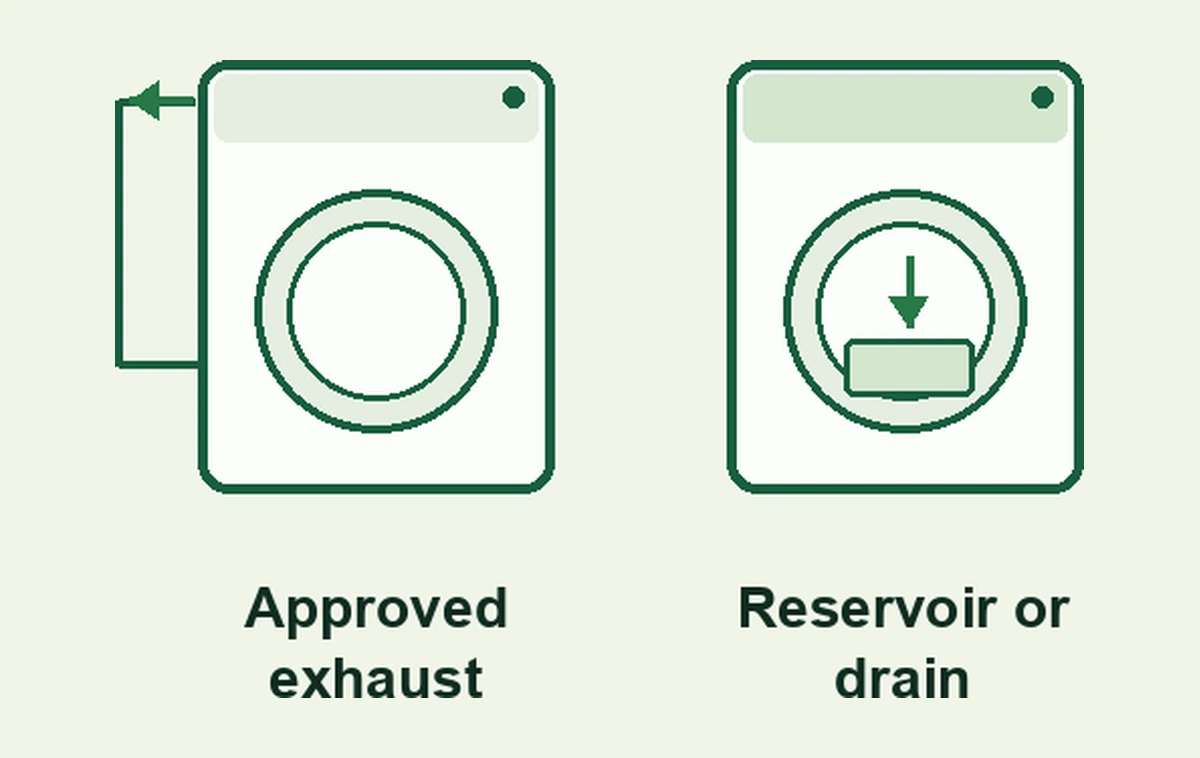
| Check | What to verify |
|---|---|
Vented | Ask about approved exhaust |
Ventless | Check water handling and power |
Apartment | Confirm management permission |
Check Space, Duct, and Hookups First
Before comparing vented and ventless dryers, check if your apartment has the right hookups and space. Most dryers need a certain amount of clearance and a way to connect to power and, if vented, a duct to the outside.
Start by measuring your laundry area. Look for a marked dryer vent on the wall or ceiling. This is usually a round or rectangular duct opening, sometimes covered with a cap or grill. If you do not see a vent, ask your property manager or check your lease documents for laundry setup details. Some apartments, especially in older buildings or high-rises, do not allow new vent installations.
For ventless dryers, you do not need an external duct, but you still need a suitable power source and enough space around the machine for airflow. Some ventless models are smaller or stackable, but always confirm the physical dimensions and stacking compatibility with your provider. Robust Rentals requires that you have compatible existing hookups. their team can help you confirm if your apartment setup matches the requirements for the machines they list.
If you are unsure about the space or connections, ask for the model manual. Manuals include measurements, clearance recommendations, and installation notes. Only qualified professionals should install or move laundry appliances in your apartment.
Space and Duct Checklist:
- Measure width, depth, and height of laundry area.
- Check for a vent opening or ductwork.
- Confirm existing hookups (ask landlord if needed).
- Request machine dimensions and manual from Robust.
- Leave enough space for door swing and loading.
Distinguish Heat-Pump and Condensing Ventless Dryers
Not all ventless dryers work the same way. The two main types are heat-pump and condensing dryers. Both avoid the need for an external vent, but they manage heat and moisture differently.
A condensing dryer pulls in room air, heats it, and passes it through the wet laundry. The air picks up moisture and then flows through a condenser unit, where water is separated and collected in a reservoir or drained away. The air, now dry and warm, cycles back through the drum. Condensing dryers can get warm on the outside and may add some humidity to the room if not sealed well or if the water reservoir overflows.
Heat-pump dryers use a refrigerant system to reuse heat more efficiently. They still collect water in a tank or drain, but they run at lower temperatures and are more energy efficient. Heat-pump dryers often have longer cycle times but are gentler on clothes.
To tell which type you are considering, check the manual or product listing for terms like "heat-pump" or "condenser." If you rent from Robust, ask them to confirm which ventless technology the machine uses.
If your apartment is small or poorly ventilated, a heat-pump model may add less moisture to the air and be more comfortable in summer. However, cycle times may be longer, and the up-front rental cost may differ. Always check the manual for specific instructions on water drainage, maintenance, and room size recommendations.
Water Reservoir, Drain Options, and Maintenance
A key difference with ventless dryers is how they handle water. Instead of sending moist air outside, they condense it and collect the water. Most ventless dryers have a pull-out reservoir you need to empty after every load. Some can be connected to a drain, but this depends on your apartment’s plumbing and the model’s design.
If you are considering a ventless dryer, ask these questions:
- Does the model have a water tank or direct drain option?
- Where is the reservoir located, and how easy is it to remove?
- How often does it need to be emptied?
- Is there an alert or indicator when the tank is full?
- What happens if the tank is not emptied in time?
Condensing dryers almost always need you to empty the tank regularly. Heat-pump dryers are similar. If you are forgetful or run several loads back-to-back, plan for extra trips to the laundry area. If there is a nearby drain (like a utility sink), some models can be set up for continuous drainage, but only if your apartment has that hookup and the rental model allows it.
Vented dryers do not have a water tank. Instead, they push humid air outside through a duct. This means less maintenance between loads, but you must keep the vent clear and check for blockages. Some apartments require periodic vent inspections for fire safety.
Loading, Runtimes, and Laundry Workflow
How you use your laundry appliances matters, especially in an apartment. Ventless dryers, both heat-pump and condensing, usually take longer to dry a load than vented models. Drying times can range from about an hour for a small, fast cycle to over two hours for bulky or full loads. The manual will list estimated cycle times for each setting.
Vented dryers tend to finish loads faster, especially for towels, bedding, and heavy fabrics. However, their faster performance depends on a clear, short vent run and strong airflow. If your apartment has a long or partially blocked duct, drying times can increase and efficiency drops.
Think about your laundry habits:
- Do you do small loads often, or large batches less often?
- Are you able to empty a water reservoir between loads?
- Is noise a concern (ventless dryers sometimes run quieter)?
- Do you need to dry bulky items, like comforters, that may need more space or a faster cycle?
If your apartment laundry area is shared or close to bedrooms, ventless dryers’ lower heat and quieter cycles may be a benefit. If you need to do several loads quickly, a vented dryer (with a working vent) can save time.
Always check the manual for maximum load size and recommended cycle settings. Overloading any dryer, vented or ventless, will slow down drying and may leave clothes damp.
Laundry Workflow Checklist:
- Estimate your typical load size and frequency.
- Check model’s cycle times in the manual.
- Plan for water tank emptying if ventless.
- Consider noise and heat output for your space.
- Confirm with Robust if your workflow matches the model’s specs.
Example Choosing for a Midtown Kansas City Apartment
Suppose you live in a mid-rise apartment near the Country Club Plaza. Your laundry closet has power and water hookups but no outside vent, just a solid wall with no duct opening. You want to rent a dryer and are deciding between ventless dryer vs vented dryer apartment options.
You measure your closet: 34 inches wide, 30 inches deep, and 80 inches high. There is just enough space for a side-by-side set. You check with your property manager, who confirms there is no vent and no permission to install one. This rules out a vented dryer.
You ask Robust Rentals for available ventless dryers. They send you the manuals for two models: one is a condensing dryer with a water tank, the other a heat-pump model with the option to connect to a drain. You read in the manual that the condensing model needs the water tank emptied after every load, and there is an indicator light. The heat-pump model can be set up to drain into the nearby utility sink, but only if the sink is within six feet and at the right height.
Read the monthly equipment charge in the written quote. Record setup, pickup or other one-time charges separately so you can tell which amount will recur.
You choose the heat-pump ventless dryer, confirm the drain setup with Robust, and schedule delivery. You keep the manual handy for maintenance and make a note to check the lint filter every week.
This example shows how space, hookups, and workflow all guide your choice. The ventless dryer fits your apartment’s restrictions, and checking the manual helps you avoid surprises.
Confirm Model Compatibility and Review Written Terms
No matter which type of dryer you choose, always confirm the exact model is compatible with your apartment’s space and hookups. Robust Rentals lists individual machines and sets, but availability and requirements can vary.
When you request a quote, ask for:
- Model manuals or spec sheets.
- Written checkout terms for billing, minimums, and fees.
- Confirmation of delivery, installation, and covered service.
Do not assume any dryer will fit just because it is listed as "apartment size." Only the manual or spec sheet will give you the details you need. If you are unsure, ask for help from Robust’s support team or your property manager.
Robust Rentals’ application shows a washer and dryer set from $59.96 per month and one washer or dryer from $35.96 per month. Check the written order summary for the actual amount due and any address-specific charges.
If you move or need to return the machine, ask about pickup procedures and any final charges. Covered service is included for eligible Kansas City addresses, so you do not have to worry about unexpected repair bills during your rental term.
By checking your space, confirming duct and hookup needs, understanding how ventless dryers work, and reviewing your laundry habits, you can make an informed choice for your apartment. Always use the manual and written terms to guide your decision.
Matching Dryer Types to Your Apartment Situation
Once you have measured your laundry area, checked for a vent, and identified your hookups, you will face specific choices about a vented dryer or a ventless dryer for your apartment. Real apartment setups and routines can make one option fit better than the other, even if you have both types available. The following scenarios walk through practical considerations that often come up when Kansas City renters or homeowners compare ventless and vented dryers.
Scenario 1: Shared Laundry Closet With Minimal Clearance
Many Kansas City apartments, especially in Midtown and downtown, have small laundry closets. These spaces may just fit a washer and dryer side by side, with little room to spare. Vented dryers typically need space for a vent hose at the back and a clear path to an exterior vent. If your closet is shallow or the vent location is awkward, a vented dryer may not fit without crimping the hose, which can lead to lint buildup or poor performance.
Ventless dryers (condensing or heat-pump) do not require a vent hose. They can sometimes sit closer to the wall. However, they will need access to a power outlet and, for some models, a place to drain condensed water or a removable reservoir that needs to be emptied regularly. If your closet is tight, check the full depth needed for the dryer, hookups, and any required water reservoir access. Always confirm the actual fit and maintenance needs with Robust before delivery.
Scenario 2: Older Apartments With Uncertain Ductwork
Some older Kansas City buildings have laundry hookups but questionable venting. The vent may be blocked, routed through long or sharp turns, or inaccessible for cleaning. In these cases, using a vented dryer without confirming the duct’s condition can risk moisture and lint buildup inside walls or ceilings. This is a common source of apartment maintenance headaches.
If you cannot verify a clear, direct vent path, and your landlord or maintenance team cannot confirm it either, a ventless dryer removes that uncertainty. It will not exhaust air outside, so you avoid the risk of hidden duct blockages. You will need to manage the water reservoir or drainage and ensure room airflow, but you reduce the chance of moisture damage. Always ask Robust for help in confirming whether a ventless model will work with your existing hookups.
Scenario 3: Laundry Areas With Limited Airflow
Ventless dryers release warm air into the surrounding space rather than sending it outside. In a large, open room, this is usually not a problem. In a small, enclosed closet or room with little airflow, though, humidity can build up over time. If your apartment’s laundry area does not have an exhaust fan or window, you may notice more condensation on walls or doors after running a ventless dryer. This is especially likely in Kansas City’s humid summer months.
To manage this, try to keep the laundry area door open during use, or run a fan to help circulate air. For renters who cannot alter their apartment, this may be the simplest solution. If you have severe moisture concerns (such as visible mold or wallpaper peeling), discuss with your property manager before choosing a ventless dryer.
Scenario 4: Maximizing Laundry Efficiency With Limited Time
If you have a busy schedule or share laundry duties with others, the time your laundry takes can be as important as space or venting. Vented dryers, when used with a good vent, tend to dry loads more quickly. Ventless dryers, especially condensing types, often take longer per cycle, sometimes nearly double the time of a vented model.
If your routine involves running several loads back-to-back (for example, in a household with kids or roommates), slower drying cycles can create a bottleneck. On the other hand, if you usually wash small or infrequent loads, a ventless dryer’s longer cycle may not matter. Some heat-pump ventless dryers are more efficient and gentler on clothes but still may not match the raw speed of a vented unit. Always check the manual for typical cycle times and compare them to your weekly laundry habits.
Worksheet: Choosing Your Best Apartment Dryer Option
Use this worksheet to help clarify which dryer type fits your situation. Fill in your answers based on your apartment and needs.
1. Is there an accessible, clean dryer vent to the outside?
- Yes: ( ) No: ( )
- If “No,” a ventless dryer may be required.
2. How much space is behind and beside the dryer location?
- Enough for vent hose and machine? ( ) Only tight fit? ( )
- If “Only tight fit,” a ventless dryer may fit better.
3. Is the laundry area well-ventilated?
- Open to a large room or has a fan/window? ( ) Small, closed closet? ( )
- If “Small, closed closet,” consider how to manage extra humidity from a ventless dryer.
4. What is your typical laundry routine?
- Many loads back-to-back? ( ) Small or infrequent loads? ( )
- If “Many loads,” a vented dryer may save time.
5. Are you able to regularly empty a water reservoir or connect a drain hose if needed?
- Yes: ( ) No: ( )
- If “No,” a vented dryer or a ventless model with direct drainage may be easier.
6. Have you confirmed with Robust Rentals that your preferred model fits your apartment’s hookups and space?
- Yes: ( ) No: ( )
- Always confirm before signing up.
This worksheet can help you organize your preferences before contacting Robust or another provider. Save your answers to discuss your needs clearly.
Example Laundry Setup Decision in a Kansas City Apartment Tower
Consider this hypothetical example. Jamie and Taylor live in a two-bedroom apartment in a mid-rise building near the Country Club Plaza. Their laundry closet is 29 inches deep and 34 inches wide, with hookups but no visible vent. The property manager cannot confirm if the vent behind the wall is clear or leads outside.
They do laundry three times a week, usually one or two loads at a time. The closet has a door that closes tightly, and there is no exhaust fan or window nearby.
- Space: After measuring, they find that a standard dryer plus a vent hose would likely push the dryer past the closet threshold. A ventless dryer, which can sit closer to the wall, appears to fit.
- Duct: The uncertainty about the vent’s path makes them wary of a vented model.
- Airflow: They note the closet is not well-ventilated. To handle humidity, they plan to keep the closet door open during drying cycles.
- Routine: Their laundry frequency is moderate, so longer ventless dryer cycles are manageable.
- Reservoir: They are comfortable emptying a water reservoir after each use.
- Rental confirmation: They contact Robust to confirm that a specific ventless model will work with their hookups and space.
In this hypothetical example Jamie and Taylor ask a ventless dryer provider for the model number, water-handling requirements, applicable hookups, current quote, and service terms. They send the resulting details to their property manager.
Frequently Asked Questions
Is a ventless dryer allowed in most Kansas City apartments?
Most apartments do not restrict ventless dryers, but you should check your lease and ask your property manager before renting or installing one. Some buildings may have rules about moisture or appliance types.
How do I know if my apartment vent is safe to use with a vented dryer?
You should not assume a vent is clear or safe based on appearance alone. Ask building maintenance or a qualified technician to inspect the duct. Never use a vented dryer with a blocked or unknown vent path.
Do ventless dryers make the apartment humid?
Ventless dryers condense moisture into a reservoir or drain, but some warm air and minor humidity may enter the room, especially in small or closed spaces. Good room airflow helps reduce this effect.
Can I use a vented dryer if I don’t have an outside vent?
No. Vented dryers are designed to exhaust moist air outside. Using them without a proper vent can cause moisture, lint buildup, and safety issues. If you do not have a vent, choose a ventless dryer.
What are the service and billing options with Robust Rentals?
Robust Rentals covers service for the machines they provide. Billing is monthly, with a minimum term of three months. There is no credit check. Request a written quote for your actual monthly amount, fees, and pickup terms.
Your Next Step
Write down your space and vent details, laundry habits, and any maintenance preferences. Contact Robust Rentals to confirm which vented or ventless dryer models match your apartment’s hookups and layout. Request a written quote for your chosen setup. This step ensures you get a dryer that fits your space and routine, without surprises after delivery.
Rental options and related guides
See current washer and dryer rental options
Measure the laundry closet and delivery route · Check apartment washer and dryer hookups
Sources and installation references
- ENERGY STAR clothes dryer buying guidance
- GE Appliances guidance on model-specific dryer clearances
- U.S. Fire Administration clothes dryer safety guidance